- Sep 24, 2025
Building Strong Houses in Shaky Times
- InnovatEd Learning Admin
- Education News
- 0 comments
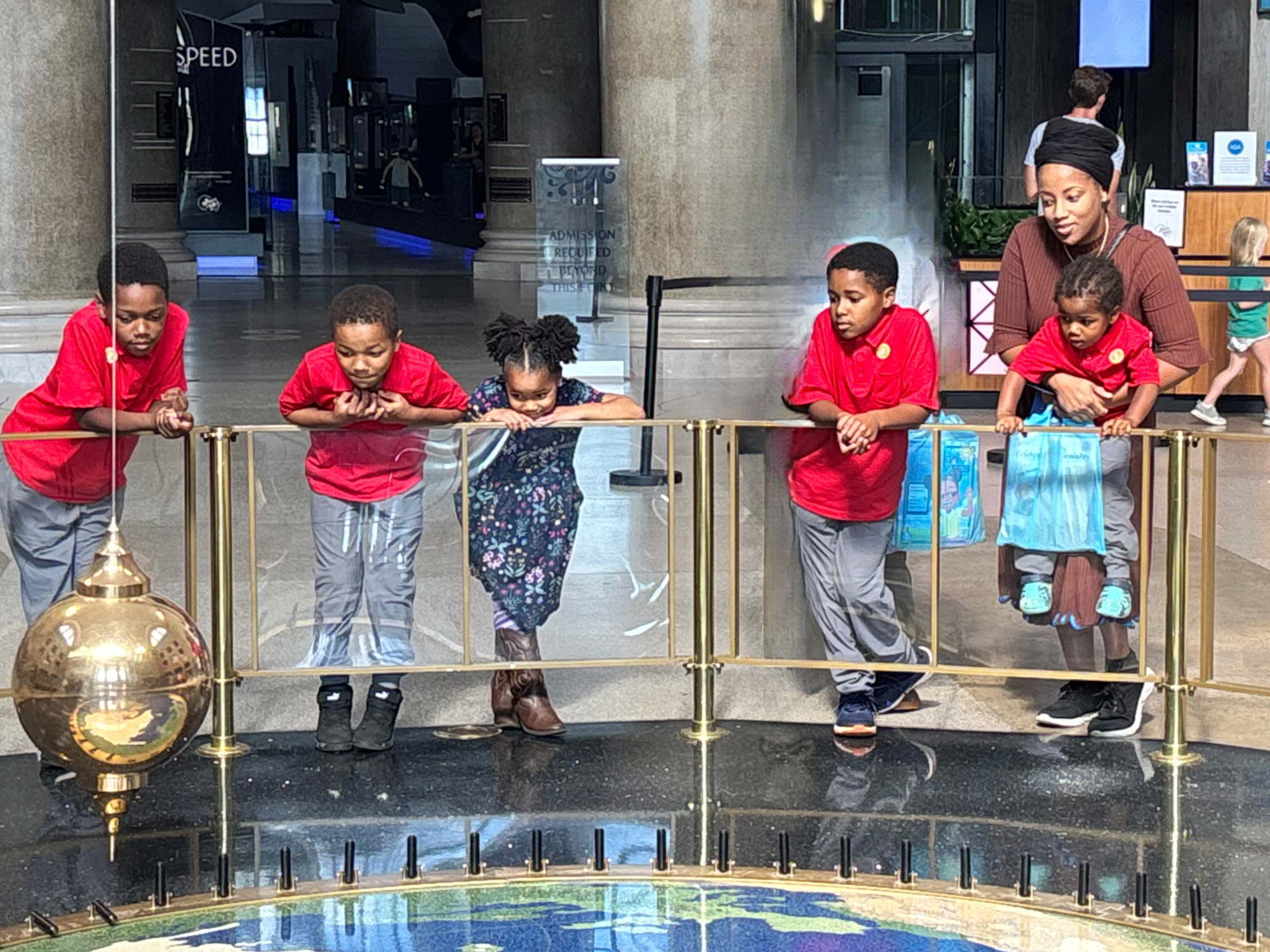
As a mom of six—five of whom I’m currently homeschooling—I read this week’s education news with an alert mind. The headlines are blunt: U.S. high school seniors are scoring at their lowest levels in decades in reading and math. Professors in southern states are considering leaving their posts under political pressure. And while some communities are building new STEM campuses, too many children still lack even the basics.
These aren’t just numbers and policy debates. They’re the stories of our children—our sons, daughters, nieces, nephews, neighbors—who deserve a future rich with opportunity. And as parents, especially Black families and homeschooling households, we cannot afford to sit this one out.
1. The Alarming Drop in Reading and Math
The latest NAEP report shows that only about 22% of high school seniors are proficient in math and just 35% in reading. That means two-thirds of our young people are entering adulthood without the skills they need to thrive in college, careers, or even civic life.
When I sit with my own children at the kitchen table, I see firsthand how foundational math facts and strong reading comprehension can make or break confidence. Without these basics, advanced science, financial literacy, or even Bible study feels out of reach.
For Black families and low-income households, the gap is even wider. Our children often land in the “below basic” category, not because they lack potential, but because the system has failed to deliver consistent instruction, smaller class sizes, and targeted help.
Action step: Parents—whether your child is in public, private, or homeschool—make this the year of back to basics.Prioritize 20–30 minutes a day of math drills and reading aloud. It’s not flashy, but it’s life-changing.
2. When Professors Leave, Teachers Shrink
At the same time, reports show that 1 in 4 professors in the South are considering leaving their jobs due to political interference. Many cite restrictions on what they can teach, especially around race, history, and diversity.
You might ask, “What does that have to do with K–12?” The answer: everything. Professors train the teachers who eventually fill our children’s classrooms. If universities hollow out, we lose a generation of well-prepared educators. And the narrowing of academic freedom trickles down—teachers become afraid to expose students to diverse voices and critical thinking.
For families, this is a reminder: don’t be surprised by what your children may or may not be exposed to in public school.
Action step: If your children attend public school, stay aware of what’s being taught—or what’s being left out. And for those looking for stability, innovation, and Bible-centered learning, I invite you to support the work we’re building with InnovatEd Learning and our nonprofit initiatives. We’re creating programs and resources that strengthen families and equip children for a future where they can thrive. Check out more
3. A Glimpse of Hope in STEM Expansion
Not all the news is grim. In Texas, Harmony Science Academy just opened a brand-new STEM campus for grades Pre-K through 7, with plans to expand through high school. Students helped bury a time capsule—planting seeds of hope that they’ll graduate from a school equipped with maker spaces and labs.
This is what equity looks like: investing in innovation while keeping kids rooted in their own community. But for every Midland, Texas, there are hundreds of towns still waiting for opportunity.
Action step: Homeschooling families—consider creating your own “STEM hubs” at home or in co-ops. And stay tuned: InnovatEd Learning will soon be releasing STEM kits that families can use together. These will bring science and engineering to your kitchen table—because every child deserves hands-on discovery.
The Biblical Lens
When I think of our children’s future, I am reminded that we have an advocate Advocacy doesn’t always have to be political. It can look like joining with other families and educators who share our values—supporting one another, learning together, and putting God’s wisdom first for ourselves and our families.
And we are reminded in Sirach 30:23:
“Love thine own soul, and comfort thy heart…” (KJVA)
The news may sound discouraging, but we don’t have to be dismayed. Our task is to stay faithful, keep our households strong, and walk in joy together.
Community activity this week: Join us for Bible Explorers on Friday (link here). Let’s explore the Word with our children while building friendships that last.
NAEP scores, homeschooling families, Black families education, STEM kits, InnovatEd Learning, academic freedom, teacher pipeline, reading and math basics, Christian homeschooling, Bible Explorers